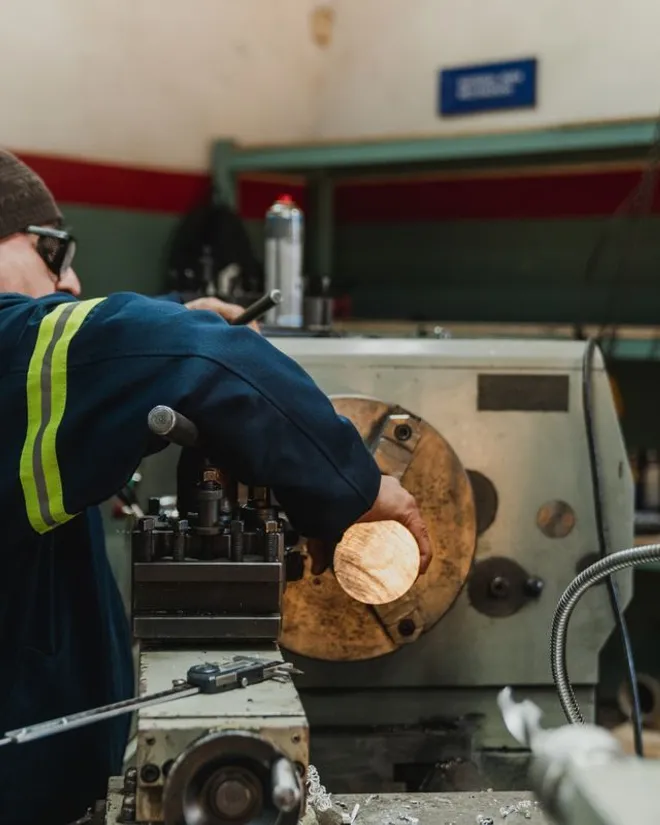
A millwright installs, moves, dismantles, and precision-aligns heavy industrial machinery. When a plant sets a new production line on its foundations, pulls a 15-ton gearbox during a shutdown, or needs a motor and pump aligned to within a few thousandths of an inch, that’s millwright work. It’s one of the best-paid mechanical trades on the floor — and one of the most misunderstood, because almost none of it shows up in the job title.
What is a millwright?
The name comes from the craftsmen who built and repaired water-powered mills, and the modern trade kept the same identity: the person who makes heavy machinery sit, spin, and mesh exactly the way the drawings say it should. Where most maintenance roles keep a running plant running, millwrights specialize in the machinery itself — installation, rigging, leveling, alignment, and major teardowns. You’ll find them in manufacturing plants, steel mills, power generation, and on industrial contractors’ crews that travel from outage to outage.
The millwright job description, day to day
The core of the work is rigging and precision. A typical stretch includes rigging equipment onto foundations with cranes and jacks, laser and dial-indicator shaft alignment, rebuilding gearboxes and other rotating equipment, setting and grouting sole plates, and fabricating or welding mounts and guards. The tools tell the story: dial indicators, laser alignment rigs, optical or machinist levels, feeler gauges, and a rigging box — shackles, slings, come-alongs — that most mechanics never touch. Plant shutdowns are the busy season, because the machines a plant can’t touch while production runs get torn down and rebuilt in a two-week window, and millwrights carry the critical path.
Millwright salary
Millwright pay sits near the top of the mechanical trades: typical postings land around $34–$43/hr, with union scale, shutdown overtime, and per-diem travel work pushing well past that. Contractor millwrights trade job security for the biggest checks; in-plant millwrights trade some ceiling for stability and a predictable schedule. Full percentile breakdowns are on our millwright salary page.
How to become a millwright
There are two real doors in. The first is a formal apprenticeship — union programs (UBC in the US) run 3–4 years and roughly 6,000–8,000 supervised hours, mixing paid field work with classroom time, and you earn a percentage of journeyman scale from day one. The second is in-plant progression: maintenance mechanics who rack up rigging and precision-alignment experience get re-titled into millwright roles without a formal ticket. Certifications that actually move you: rigging and signalperson certs, NCCER Millwright, and a structural welding cert like AWS D1.1 for contractor work. Which certs pay off — and in what order — is covered in our guide to certifications that raise your maintenance pay.
Millwright vs maintenance mechanic
The trades overlap heavily, and plenty of in-plant “millwright” postings are senior mechanic jobs with alignment and rigging responsibility bolted on. The honest distinction: a maintenance mechanic keeps existing equipment running — PMs, breakdowns, rebuilds — while a millwright specializes in installing, moving, and precision-aligning the equipment itself. A machinist is different again: machinists cut new parts on lathes and mills; millwrights put the machines together and make them run true. If you’re comparing the whole family of roles, our types of industrial maintenance jobs guide lines them all up.
Is the trade worth aiming for?
If you like big mechanical work with a visible finish line — the line runs, the vibration readings are clean, the job is done — it’s hard to beat. The trade-offs are real: contractor work means travel and layoffs between projects, shutdown seasons mean long stretches of 6-day weeks, and the work is physically harder on the body than a controls tech’s. But the combination of pay, demand, and skills that can’t be automated makes millwright one of the most durable bets in industrial maintenance.
Ready to look? Browse live millwright jobs by state, shift, and employer.